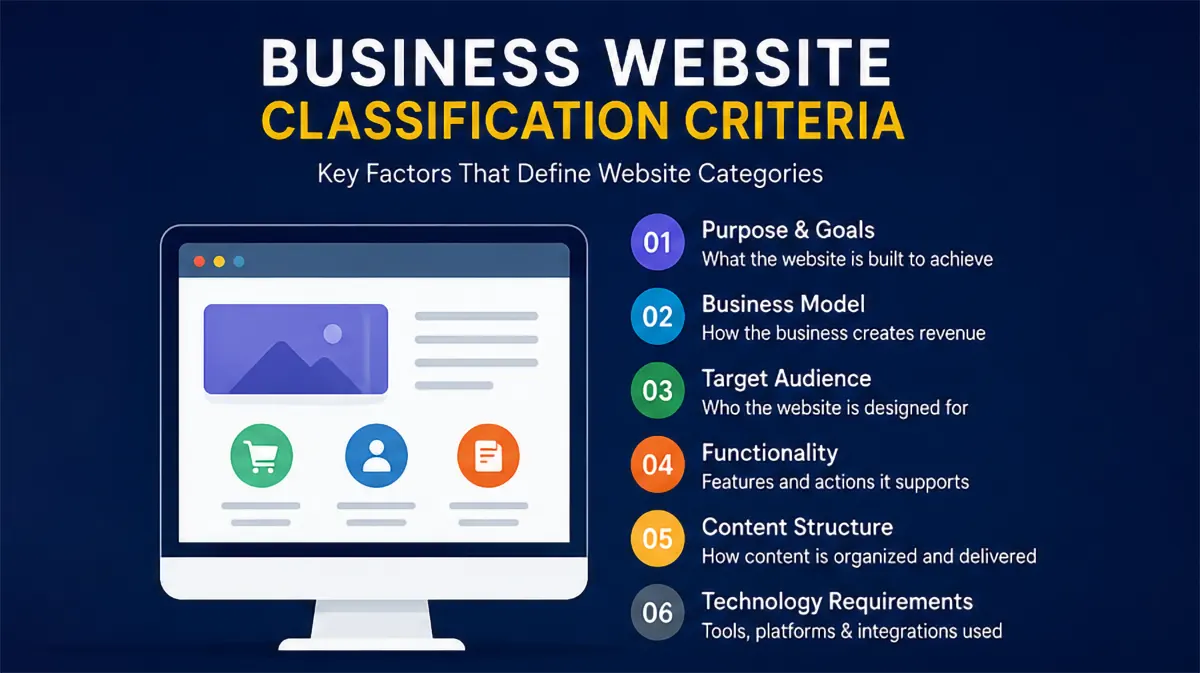
A business website is classified mainly by its purpose, functionality, target audience, business goals, content structure, and the actions it allows visitors to take. The same company can have a website that looks similar to another business but belongs to a completely different category because the website is built for a different job.
For example, a local service company website and an online store may both have a homepage, contact page, and images. But one exists to generate phone calls and leads, while the other exists to manage transactions, inventory, payments, and customer accounts.
That difference is where proper classification begins.
What Are Business Website Classification Criteria?
Business website classification criteria are the factors used to identify what type of website a business owns and what role that website plays in the company’s growth.
Many people classify websites only by appearance. That is usually wrong.
A modern website should be classified by:
- Why the website exists
- What users are expected to do on it
- How the business makes money
- How much interaction the visitor needs
- What technology supports the website
- How content is organized
A five-page website and a 500-page website can both be “business websites,” but their classification, strategy, and technical requirements are completely different.
Main Business Website Classification Criteria
The most important criteria are not design trends. They are business functions.
| Classification Factor | What It Determines |
|---|---|
| Website purpose | Information, sales, leads, support, branding |
| Business model | Service-based, product-based, subscription, marketplace |
| User actions | Contact, purchase, book, register, download |
| Content volume | Small brochure site or large content platform |
| Technology needs | CMS, ecommerce system, custom applications |
| Conversion goal | Leads, revenue, awareness, customer retention |
1. Website Purpose and Business Goal
The first question is simple:
What is this website supposed to achieve?
A website without a clear business purpose usually becomes a collection of random pages.
A business website may exist to:
- Generate leads
- Sell products
- Build trust
- Educate customers
- Provide customer support
- Create an online presence
- Automate business processes
A plumbing company, for example, does not need a complicated ecommerce system. Its website’s main job is usually:
- Show credibility
- Explain services
- Rank on Google
- Make it easy to call or request a quote
A software company may need something completely different:
- Product demonstrations
- Account creation
- Documentation
- Pricing calculators
- Customer dashboards
Same category: business website.
Different classification.
2. Classification Based on Business Model
A company’s business model strongly influences website structure.
Service-Based Business Websites
These websites are built around trust and lead generation.
Examples:
- Dentists
- Lawyers
- Contractors
- Marketing agencies
- Consultants
The important elements are usually:
- Service pages
- Testimonials
- Case studies
- Reviews
- Contact forms
- Booking systems
A common mistake is creating a beautiful service website that does not answer customer questions. Visitors do not only want to know “what you offer.” They want to know:
- Why should I choose you?
- Have you solved this problem before?
- What happens after I contact you?
Product-Based Business Websites
These websites focus on selling physical or digital products.
Important features include:
- Product pages
- Search filters
- Shopping cart
- Payment processing
- Inventory management
- Customer accounts
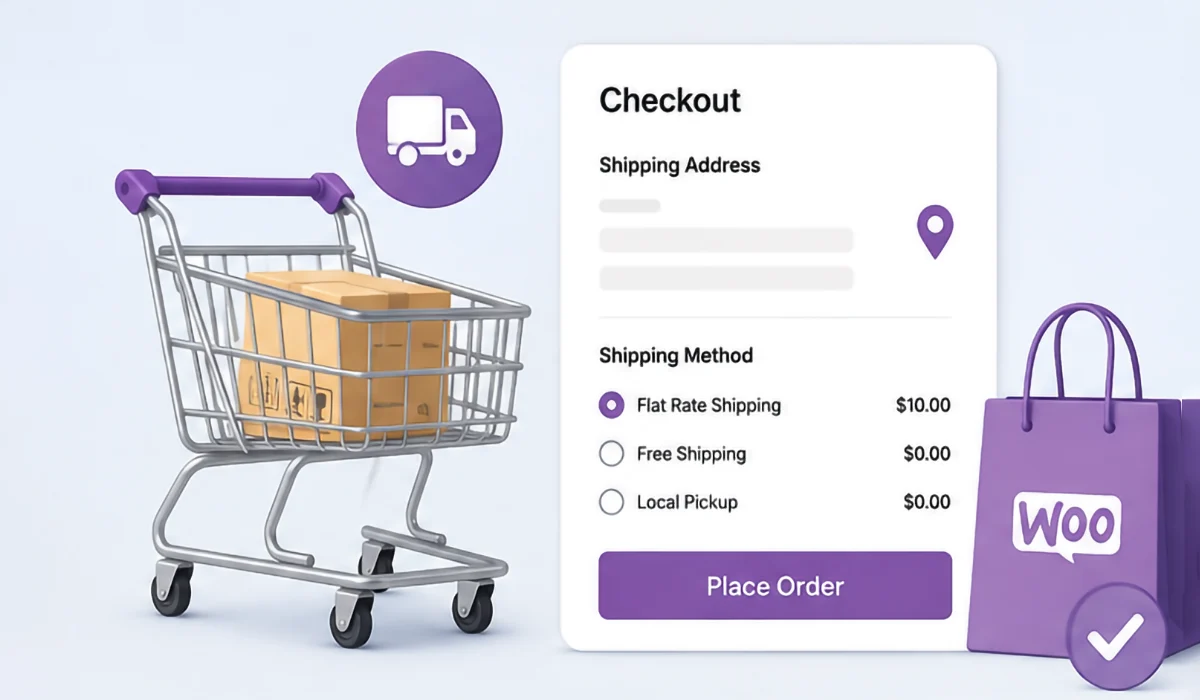
An ecommerce website is not just a website with products added. It is closer to a sales system.
A small mistake in product organization can directly reduce sales.
For example, confusing categories, weak product descriptions, or slow checkout pages can create friction that causes visitors to leave.
Membership and Subscription Websites
These websites depend on recurring user relationships.
Examples:
- Online learning platforms
- SaaS companies
- Communities
- Subscription services
They often require:
- Login systems
- Member dashboards
- Payment subscriptions
- User management
These websites are classified differently because the main conversion is not a single purchase. It is a long-term relationship.
3. Classification Based on Website Functionality
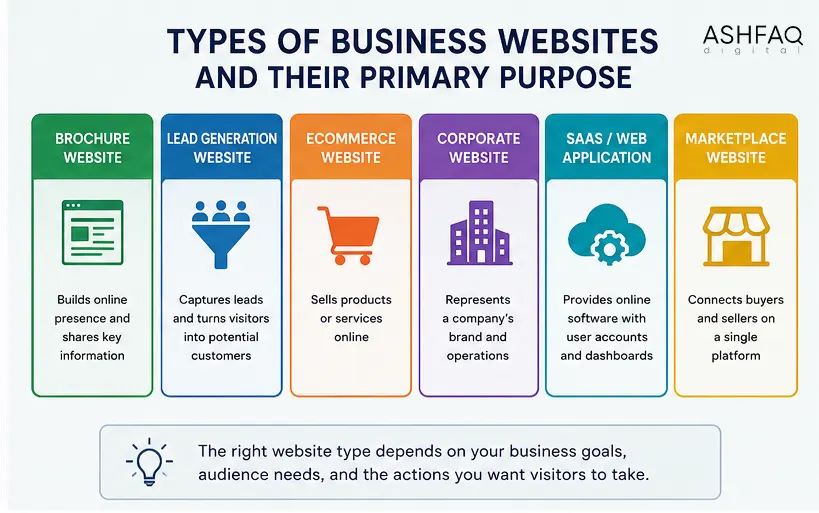
Functionality is one of the strongest classification signals.
A website can be:
Informational Website
The main purpose is sharing information.
Common features:
- About pages
- Blog content
- Resources
- FAQs
Many small businesses start here.
Lead Generation Website
The website is designed to turn visitors into potential customers.
Typical features:
- Quote forms
- Consultation booking
- Calls to action
- Landing pages
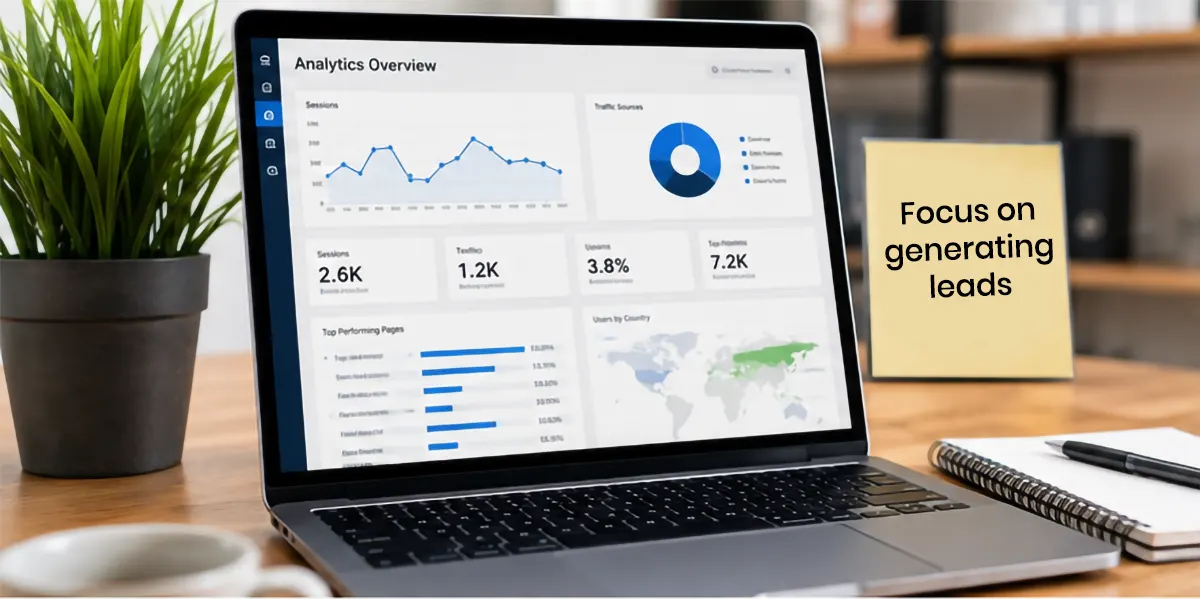
A lead generation website should be measured differently from an ecommerce website.
The goal is not “how many people bought something.”
The goal is “how many qualified people contacted the business.”
Ecommerce Website
Built for online transactions.
Key features:
- Product catalog
- Checkout process
- Payment gateway
- Order management
Web Application
This is where the website becomes more like software.
Examples:
- Customer portals
- Booking platforms
- Management systems
The classification changes because users are not only reading pages. They are interacting with a system.
4. Classification Based on Target Audience
A website’s audience affects its structure.
A website built for consumers (B2C) usually focuses on:
- Simple navigation
- Emotional buying decisions
- Quick information
A business-to-business website (B2B) often requires:
- Detailed information
- Technical explanations
- Case studies
- Sales support materials
A common mistake businesses make is copying consumer website styles for B2B audiences.
A company buying expensive software does not behave like someone buying a pair of shoes.
The decision process is different.
5. Classification Based on Content Structure
Content organization also helps classify websites.
Small Business Website
Usually includes:
- Homepage
- Services
- About
- Contact
- Testimonials
Corporate Website
Usually includes:
- Multiple departments
- Investor information
- Careers
- Press releases
- Global locations
Content-Driven Website
Focused heavily on publishing information.
Examples:
- News websites
- Industry blogs
- Educational platforms
These websites depend on:
- Search visibility
- Content organization
- Internal linking
6. Classification Based on Technology Requirements
Technology reveals the real complexity of a website.
A simple business website may use:
- WordPress
- Website builders
- Basic CMS platforms
A more advanced website may require:
- Custom development
- APIs
- Database systems
- Automation tools
Two websites can look identical visually but have completely different technical foundations.
A custom booking platform and a basic contact form may appear similar to visitors, but behind the scenes they are completely different categories.
Business Website Classification Criteria by Website Type
Why Correct Website Classification Matters
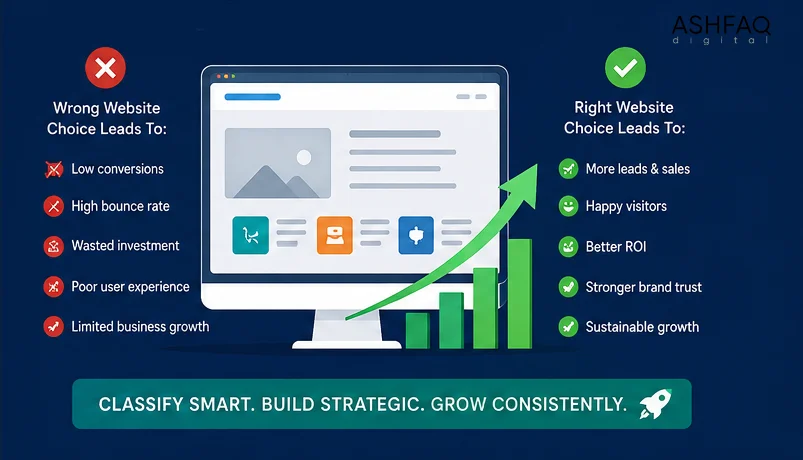
Many businesses invest money into websites without understanding what type they actually need.
This creates problems:
- Wrong features are developed
- Marketing goals become unclear
- SEO strategy becomes weak
- Visitors do not know what to do next
A local service business does not need a complex ecommerce setup.
An ecommerce company does not need a website designed like a simple brochure.
The classification decides the strategy.
Common Mistakes Businesses Make When Choosing a Website Type
Building Based on Competitors Alone
A competitor’s website may look successful, but their business model may be completely different.
Copying design without understanding purpose often creates expensive mistakes.
Adding Too Many Features
More features do not automatically create better websites.
Every feature should support a business goal.
A booking system that nobody uses is just maintenance cost.
Ignoring Future Growth
A website should solve today’s problems but allow tomorrow’s growth.
A small company may start with five pages but later need:
- More services
- More locations
- More content
- Better automation
Planning classification early prevents rebuilding everything later.
Frequently Asked Questions
The main criteria include website purpose, business model, functionality, audience, content structure, and technology requirements.
Yes. Ecommerce websites are a type of business website focused mainly on selling products or services online.
Yes. Many modern websites combine categories, such as a service website with ecommerce features or a corporate website with customer portals.
Because SEO strategy depends on website purpose. A local service website needs local SEO, while a content platform needs topic authority and information architecture.
Build the Right Business Website With Ashfaq Digital
At Ashfaq Digital, we approach website design and development by first understanding what the website needs to achieve.
A website is not just about colors, layouts, or adding pages. The structure should match the business model.
We help businesses create websites that are built around:
- Clear user journeys
- Strong website structure
- SEO-friendly foundations
- Better conversion opportunities
Whether a business needs a professional service website, ecommerce platform, or a custom website solution, the focus is creating something practical that supports real business goals.
Contact Ashfaq Digital today and build a website that fits your business, not just your industry.