

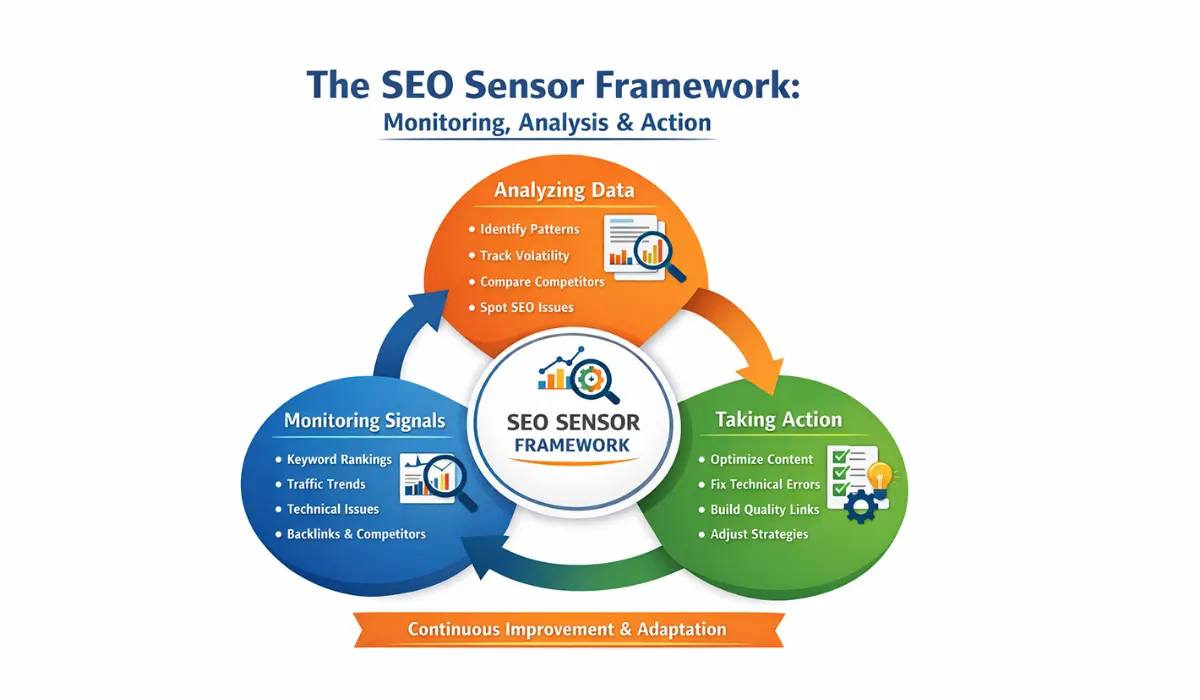
In the rapidly evolving world of search engines, understanding how your website behaves in response to algorithm updates, competitive changes, and user behavior is critical. SEO sensors are not apps they are conceptual frameworks and methodologies for continuous monitoring of search engine signals and website performance.
By employing an SEO sensor methodology, businesses and digital marketers can detect ranking trends early, respond to changes effectively, and optimize content based on data-driven insights. This article will explain the concept in depth, provide actionable strategies, and demonstrate why expert implementation is a game-changer.
What is an SEO Sensor?
An SEO sensor is a systematic approach to monitoring the performance of a website in search engines. It acts like a “digital sensor,” detecting shifts in:
- Keyword rankings across search engines
- Traffic patterns and user engagement
- Backlink performance and domain authority
- Technical SEO issues such as crawl errors or broken links
- SERP volatility and competitor performance
Unlike specific software features, the concept focuses on methodology, leveraging multiple data points and signals to inform optimization strategies.
Expert Tip: Think of an SEO sensor as a scientific experiment collecting, analyzing, and interpreting data over time to make evidence-based SEO decisions.
Why SEO Sensors Are Essential in Modern SEO
Detect SERP Fluctuations Early
Search engine rankings can change daily due to algorithm updates, competitive moves, or content shifts. An SEO sensor methodology allows early detection of ranking volatility, so corrective action can be taken before traffic and conversions drop.
Integrate Multiple SEO Signals
SEO performance is multidimensional. Sensors aggregate insights from:
- Organic traffic trends
- User engagement metrics (time on page, bounce rate)
- Backlink quality and growth
- On-page and technical SEO indicators
Make Data-Driven Decisions
Relying on intuition alone is risky. An SEO sensor framework ensures every SEO decision is grounded in measurable data, improving ROI and long-term growth.
Pros and Cons of Using an SEO Sensor Methodology
| Pros | Cons |
|---|---|
| Early detection of ranking changes | Requires continuous monitoring |
| Combines multiple SEO signals for deeper insights | Can be complex for beginners |
| Informs proactive optimization | Interpretation requires expertise |
| Supports competitive benchmarking | Needs consistent data collection |
How to Implement an SEO Sensor: Step-by-Step
- Define Key Performance Indicators (KPIs): Determine which metrics—rankings, traffic, engagement are critical for your business.
- Collect Data Systematically: Gather historical data to establish benchmarks and detect trends.
- Monitor SERP Volatility: Track daily, weekly, or monthly changes in rankings to anticipate algorithm impacts.
- Analyze Competitor Signals: Compare performance against competitors to uncover gaps or opportunities.
- Identify Technical Issues: Regularly check crawl errors, page speed, and indexation for potential ranking barriers.
- Generate Actionable Insights: Use data to guide content strategy, backlink outreach, and UX improvements.
- Evaluate and Iterate: Continuously refine strategies based on outcomes and emerging trends.
Expert Insight: Use a combination of manual review and automated alerts to detect anomalies this hybrid approach improves accuracy and response time.
Common Mistakes in SEO Monitoring
- Ignoring SERP fluctuations or thinking ranking drops are random
- Monitoring only one metric, such as keywords, while ignoring traffic or engagement
- Relying entirely on automated suggestions without expert review
- Failing to track competitor actions consistently
- Overlooking technical SEO issues like crawl errors or duplicate content
Pro Tip: Cross-check ranking trends with organic traffic and conversion metrics high rankings alone do not guarantee business results.
Myths vs Facts About SEO Sensors
| Myth | Fact |
|---|---|
| Sensors replace human SEO expertise | They enhance decision-making but require strategic interpretation |
| Only high-traffic websites benefit | Any website with growth goals benefits from monitoring trends |
| Ranking fluctuations are always algorithm errors | Many changes are due to competition or content relevance |
| Keyword tracking is enough | Holistic monitoring includes traffic, engagement, backlinks, and technical health |
Real-World Applications
- E-commerce: A site noticed a sudden dip in organic traffic. Sensor methodology revealed it was due to slow-loading pages and a recent competitor content update, enabling fast corrective action.
- Service Industry: A local clinic tracked competitor keyword trends and content performance, which guided their blog strategy, increasing organic leads by 35% in three months.
- Content Publishers: Media websites track topic clusters and engagement signals to predict which content will trend next, allowing early optimization.
FAQ: Understanding SEO Sensor Methodology
No. They are methodologies for monitoring and interpreting multiple SEO signals, independent of any specific software.
Yes. Even small sites benefit from structured monitoring of rankings, traffic, and content performance.
By tracking ranking volatility across multiple keywords and comparing changes against historical trends.
Daily or weekly checks are ideal for active websites; monthly reviews may suffice for smaller sites.
Absolutely. They reveal which topics, keywords, and formats drive engagement and traffic.
Yes, monitoring link acquisition, quality, and lost links is critical for domain authority.
Methodologies can incorporate AI or automation, but the framework itself is conceptually independent of technology.
Yes. Tracking local ranking fluctuations, reviews, and competitive content informs targeted optimization.
Yes. Crawl errors, broken links, and slow-loading pages can all be identified using a sensor framework.
Define KPIs, collect structured data, monitor trends, analyze signals, and iterate strategies continuously.
Key Takeaways
- SEO sensors are conceptual frameworks for monitoring and interpreting website and SERP signals.
- They combine multiple data sources to provide actionable insights and anticipate search engine changes.
- Proper implementation enables proactive optimization, better user experience, and measurable growth.
- Avoid common mistakes like focusing on a single metric or ignoring technical issues.
Why Ashfaq Digital Excels in SEO Sensor Methodology
Ashfaq Digital brings practical expertise, strategic insight, and continuous monitoring together. We don’t just track data we interpret trends, prioritize opportunities, and implement actionable SEO strategies tailored to your website.
Our clients benefit from:
- Proactive ranking monitoring
- Competitor intelligence for smarter strategies
- Holistic SEO insights combining content, technical health, and backlinks
- Continuous improvement for measurable results
Our methodology aligns with the latest SEO best practices from Moz and Ahrefs, ensuring every recommendation is grounded in credible, actionable research.
Ready to implement a proven SEO sensor methodology and elevate your website performance?
Contact Ashfaq Digital today and start optimizing for data-driven growth.